

Unicompartmental/Partial Knee Replacement Surgeon in SC
Older people with osteoarthritis that is confined to a single compartment of the knee are candidates for unicompartmental knee replacement, in which only the damaged compartment of the knee is replaced with an implant. Dr Pinski provides diagnosis and minimally invasive unicompartmental knee replacement in SC. Dr Pinski also provides the highest level of care during and after the surgery. Contact Dr Pinski's office for an appointment today!
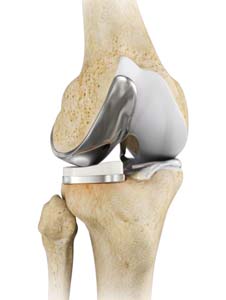
What is Unicompartmental Knee Replacement?
Unicompartmental knee replacement is a minimally invasive surgery in which only the damaged compartment of the knee is replaced with an implant. It is also called a partial knee replacement.
The knee can be divided into three compartments: patellofemoral, the compartment in front of the knee between the kneecap and thighbone, the medial compartment, on the inside portion of the knee, and lateral compartment which is the area on the outside portion of the knee joint.
What is Arthritis?
Arthritis is the inflammation of a joint that causes pain, swelling (inflammation) and stiffness.
Osteoarthritis is the most common form of knee arthritis, in which the joint cartilage gradually wears away. It most often affects older people. In a normal joint, articular cartilage allows for smooth movement within the joint, whereas in an arthritic knee the cartilage itself becomes thinner or completely absent. In addition, the bones become thicker around the edges of the joint and may form bony spurs. These factors can cause pain and restricted range of motion in the joint.
How is Arthritis Diagnosed?
Your doctor will diagnose osteoarthritis based on your medical history, physical examination, and X-rays. X-rays typically show a narrowing of joint space in the arthritic knee.
What are the Indications for Unicompartmental Knee Replacement?
Traditionally, total knee replacement was commonly indicated for severe osteoarthritis of the knee. In total knee replacement, all worn out or damaged surfaces of the knee joint are removed and replaced with new artificial parts. Partial knee replacement is a surgical option if your arthritis is confined to a single compartment of your knee.
Your doctor may also recommend surgery if non-surgical treatment options such as medications, injections, and physical therapy have failed to relieve the symptoms.
How is robotic Unicompartmental Knee Arthroplasty (UKA) performed?
Preoperatively, a CT scan is obtained to create a detailed model of your knee. A small midline incision is made over the knee to expose the damaged knee joint. Pins are placed in the tibia and femur to attach the robotic arrays. The damaged knee is then mapped to the CT scan and utilizing software the knee is balanced based on ligament tension. The robotic system ensures optimal alignment and implant position based on the patient's natural joint motion and soft tissue balance. Precise bone cuts are then made utilizing a robotic arm. Only the damaged portions of the single compartment (arthritis, meniscus) are removed, and healthy bone, ligaments, and unaffected compartments will be preserved. Trial implants are placed to assess stability and range of motion. Once appropriate stability is achieved, the real components are cemented onto the prepared bony surfaces. The real plastic liner is then placed in between the femoral and tibial components. The knee undergoes final range of motion and stability testing. The pins and arrays are removed and the knee joint is irrigated with sterile solution. A layered closure is performed and a sterile, waterproof dressing is placed.
What does Rehabilitation for UKA Involve?
Rehabilitation begins immediately after surgery. You will walk with the assistance of walker or a cane after surgery and climb stairs . You will transition away from an assertive device at your own pace. Home therapy can be utilized for the first few weeks with the goal of beginning outpatient physical therapy as soon as possible.
What are the Advantages of Unicompartmental Knee Replacement?
The advantages of unicompartmental knee replacement over total knee replacement include:
- Feels more like a natural knee
- Smaller incision
- Less blood loss
- Quick recovery
- Less postoperative pain
- Better overall range of motion
What are the Risks of Unicompartmental Knee Arthroplasty (UKA)?
The possible risks and complications associated with unicompartmental knee replacement include:
- Knee stiffness
- Infection
- Blood clots (Deep vein thrombosis)
- Nerve and blood vessel damage
- Ligament injuries
- Wearing of the plastic liner
- Loosening of the implant
For more information about our services or to schedule an appointment, call us at or click here to request an appointment online. We’ll respond to you as soon as possible.


