

Robotic-Assisted Knee Replacement in SC
During knee replacement surgery, damaged or worn-out regions of the knee joint are removed and replaced with artificial implants. In a robotic total knee replacement, surgeons employ computed tomography (CT) scans to construct a virtual model of the patient's knee. With that model as a guide, the surgeon then utilizes the robotic arm to accurately place the new knee components. Dr Pinski provides diagnosis and minimally invasive knee replacement surgery using robotic-arm technology in SC. Dr Pinski also provides highly specialized care during and after surgery. Contact Dr Pinski’s office for an appointment today!
What is Robotic-Assisted Knee Replacement?
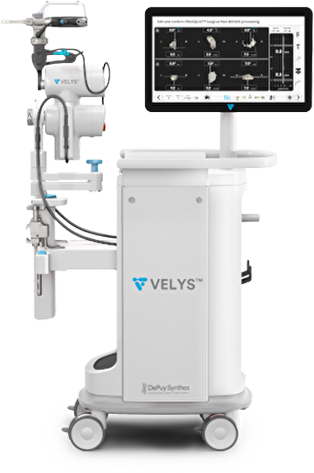
Robotic-assisted knee replacement surgery is an alternative to the conventional knee replacement procedure. It is performed using robotic-arm technology that allows your surgeon to precisely perform the surgery through a smaller incision as compared to traditional surgery.
What are the Indications for Robotic-Assisted Knee Replacement?
The indications for robotic total knee replacement are essentially the same as compared to manual total knee replacement. These include functionally limiting pain refractory to nonoperative treatment and knee instability. The robot is a tool that can assist surgeons through greater precision, improved alignment accuracy, and in knees with retained hardware.
How is Robotic Total Knee Performed?
The surgery is performed under spinal or general anesthesia with a block. A midline incision is utilized to approach the knee joint. Once the knee is exposed, tibial and femoral pins are placed in the incision to hold the robotic arrays. The knee is then registered with the robot by identifying consistent points on the leg and taking the leg through a range of motion. The Velys system does not require advanced imaging like a CT scan. The knee is mapped to the computer software intraoperatively using a special high speed camera. The knee undergoes a ligamentous exam through a range motion. Robotic software then allows for the surgeon to template the appropriate alignment, component size, and balance the knee utilizing these data. A robotic arm is then used to create the bony cuts on the femur and the tibia. After removal of the soft tissue and bone cuts, trial implants are placed and the knee is taken through a range of motion assessing stability. The robotic software can provide more information on stability utilizing special software. The trial components, pins, and robotic arrays are removed. The real femoral and tibial components are inserted. The final liner is placed in between the tibial and femoral components. The patella may or may not be resurfaced. Once the components are placed, the knee undergoes a final range of motion and stability exam. The knee is irrigated with sterile solution. A layered closure is performed and a sterile waterproof bandage is placed.
What are the Benefits of Robotic-Assisted Knee Replacement?
The benefits of the robotic-assisted knee replacement include:
- More precise bone resection
- Improved alignment accuracy
- Reduced reduced need for soft tissue releases
- Total knee arthroplasty in patients with retained hardware or complex anatomy
For more information about our services or to schedule an appointment, call us at or click here to request an appointment online. We’ll respond to you as soon as possible.


